


Air Mold Test Kit
Air Mold Test Kit
How many rooms do you want to test? Each room = 1 cassette
Couldn't load pickup availability
Description
Description
- Easy, Safe and Simple to use
- Professional Air Tests included
- Get Peace of Mind and Protect your family from harmful Mold and mycotoxins
- Lab Fees and detailed report included in Price
- Save money vs hiring a Professional home mold inspector
- Same Technology and Process that most Pros use
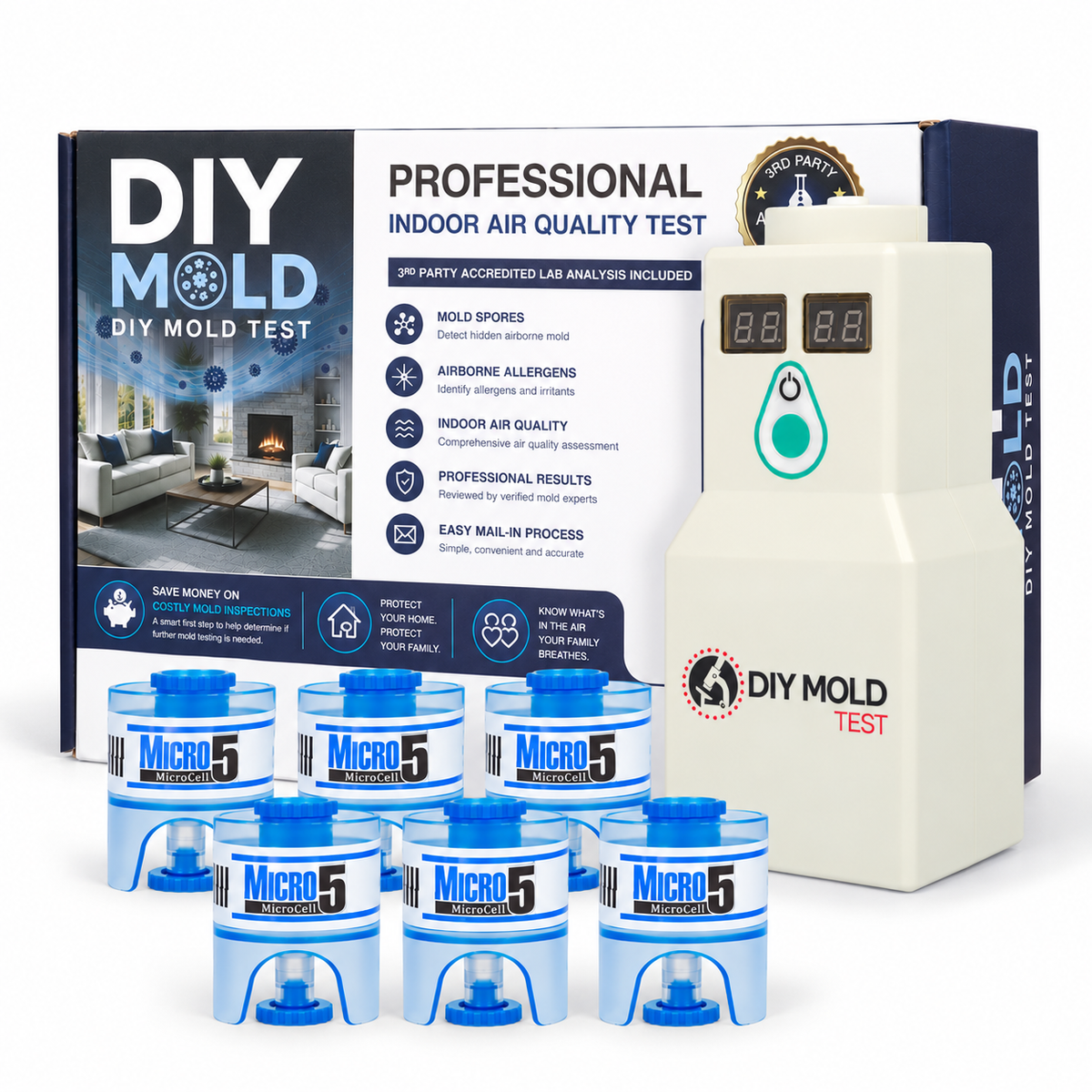
- Mold Air Pump Included
What It Tests For
What It Tests For
This kit tests the air in your home for mold spores. This is a good option for people who suspect mold but maybe don’t see evidence. You might have an odd smell or an unexplained recurring sickness etc. This test lets you know what you are breathing everyday.
How It Works
How It Works
A Pump pulls air through a specialized test cassette at a controlled flow rate. The spores in the air are impacted onto a gel like media inside of the cassette. The gel like media is analyzed under a microscope and the spores are counted/reported in actual counts like 500 spores per cubic meter.
Shipping & Returns
Shipping & Returns
Standard Shipping - $9.99 (FREE SHIPPING on orders over $99). See our shipping policy for details.
15 Day Hassle-Free Returns. See our returns page for more information.


Identifies every airborne mold spore in your sample
Our accredited lab analyzes your sample at 400x magnification, identifying all mold genera and groups present with exact spore counts. Below are the common mold types found in homes.
Stachybotrys
Black Mold

Aspergillus
PEN/ASP Group
Penicillium
Blue-Green Mold
Cladosporium
Common Outdoor Mold
Alternaria
Common Allergenic Mold
Chaetomium
Water-Damage Mold
Basidiospore
Mushroom & Wood-Decay Spores
Smuts/Myxomycetes
Plant & Slime Mold Spores
Torula
Dark-Pigmented Mold
All testing is performed using advanced microscopy techniques by certified laboratory technicians. Results are typically available within 1-3 days of our lab receiving the sample.
See why customers love air mold tests
We were dealing with a mold issues in our house, and initially paid $500 for a report done by a local company. After the mold clean-up, opening walls, removing cabinets, replacing floors, etc, we wanted to make sure all the mold had been removed. The air testing cartridge system available from DIY Mold is comparable to the one used by the local company.
- Maria SandersWe had mold tested in our home and it came back positive for PEN/ASP. They were so personable and helpful with questions. We were able to mitigate and then test the air. It gave great relief to find it negative this time. Thank you for your needed service!
- Brooke JohnsonThe product was simple to use and the customer service was fantastic! The report came back in a few days and gave us peace of mind. Our family is very grateful for this product and company!
- Heather PerlebergFrequently Asked Questions
Speak with a Mold Expert
What does an air mold test measure?
An air mold test collects spores from a controlled volume of air. A calibrated pump pulls air through a cassette. Inside the cassette is a small microscope slide with a gel like adhesive that “traps” the mold spores. The lab technicians place this slide under a microscope for analysis. The report identifies the mold types/groups observed and gives counts for their concentrations expressed in spores per cubic meter of air (spore/m3). This gives you a snapshot of the conditions at the time and location of the sample.
Which rooms should I test, and why do I need an outdoor sample?
Start with “suspect” rooms. Anywhere you notice musty odors, have water damage, or an area where you notice that your allergy symptoms seem to worsen. Outdoor samples provide a reference because mold spores exist naturally outside and can enter through doors, windows, and etc. Comparing indoor and outdoor mold types and concentrations will help us interpret your results.
How should I prepare my home before collecting air samples?
Read the entire instructions included with your kit before collecting samples. Avoid vacuuming, dusting, sweeping, and etc. These activities can artificially increase spore counts. Try to keep your home under typical living conditions prior to testing. Air purifiers can affect mold spore levels. Make notes on your Chain of Custody form about any recent disturbance prior to testing.